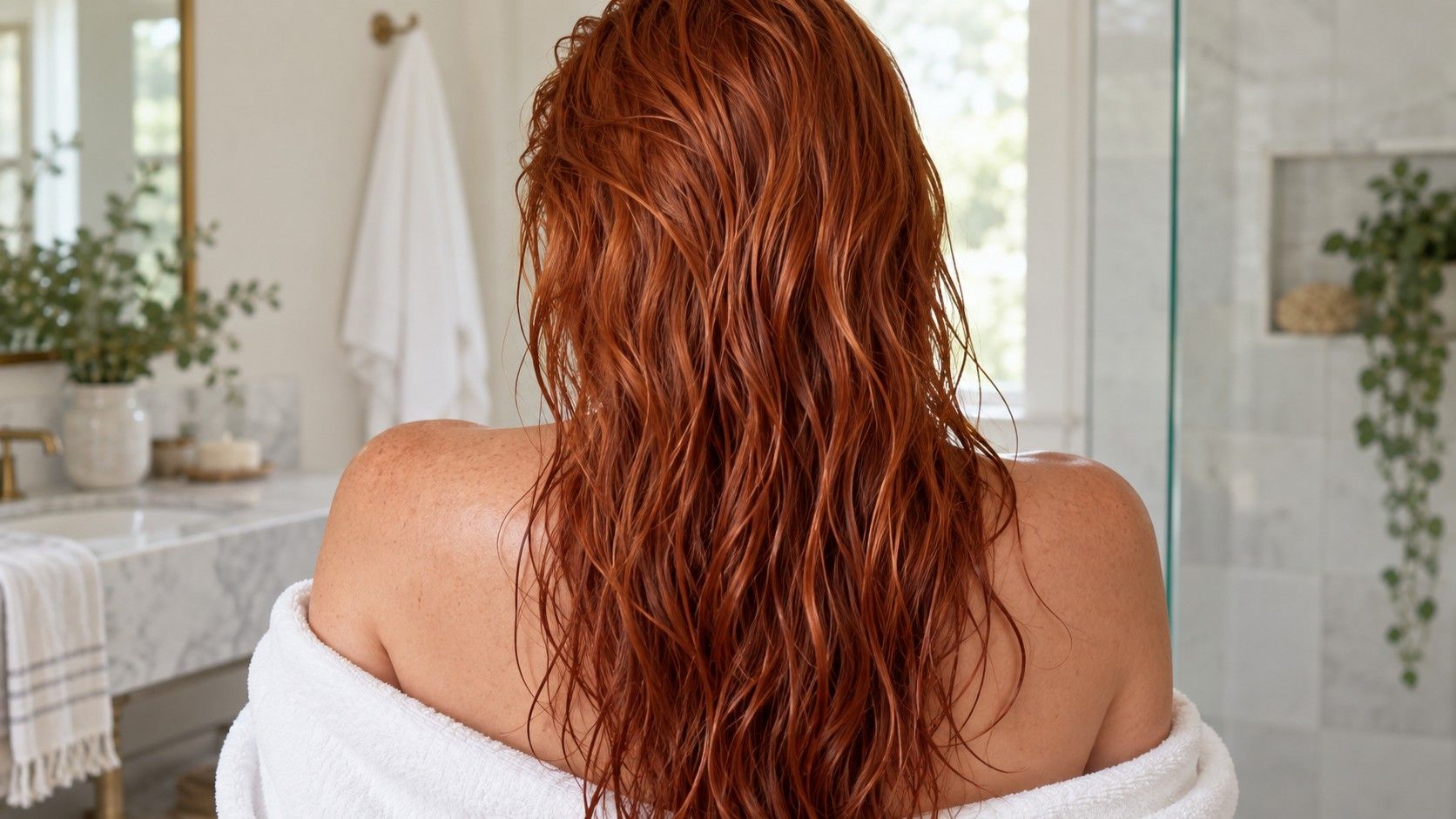
Seeing pink water in the shower can feel like watching a new red shade disappear down the drain, but rinse color alone cannot measure how much the hair has faded. Red hair dye bleeding is pigment moving into water, onto fabric, or onto skin, usually while the hair is wet. Fading is the visible change in the dry hair over time. The two can happen together, yet they do not always move at the same rate. A useful assessment compares dry photos, the type of color used, where transfer occurs, and how the hair behaves between washes.
Compare the dry color rather than judging the rinse water alone
Start with the hair completely dry and viewed in similar lighting. Indirect daylight is more reliable than a warm bathroom bulb, which can make copper look richer, or a cool phone flash, which can flatten red. Compare the current shade with a filter-free photo taken after the first post-color wash. Match the parting, background, and exposure as closely as practical. If the dry color is still equally deep and even while the water runs pink, the visible loss may be much smaller than the shower suggests.
Check whether your dye is a direct-color product
Look beyond overall brightness. Fading may appear as a change from red-violet to rose, from cherry to warmer red, or from copper-red to softer gold. Porous lengths can shift faster than the roots, leaving a duller band through old highlights or dry ends. Dye bleeding, by contrast, often announces itself through pink droplets, a marked towel, a stained collar, or color on fingers after touching wet hair. Those signs show transfer, not its exact effect on the final dry shade.
| Observation | More useful interpretation | Next check |
|---|---|---|
| Pink rinse water, dry shade looks stable | Surface or excess pigment may be transferring | Compare another dry photo after the next normal wash |
| Water becomes clearer, but dry red looks weaker | Visible fading is occurring even with less dramatic bleeding | Compare tone and depth at roots, mids, and ends |
| Towels stain only when hair is wet | Wet-hair color transfer is the immediate problem | Improve rinsing and keep damp hair off pale fabrics |
| Ends look darker after frequent tinted care | Porous areas may have pigment buildup | Pause automatic refreshing and reassess dry hair |
Do not use the color of a white sink as a calibrated fading meter. A small quantity of concentrated red pigment can tint a large area of water and look dramatic against porcelain. The opposite is also possible: gradual tonal loss may be hard to notice in rinse water but obvious when the dry hair is placed beside an older photo. The mirror, photos, and zone-by-zone comparison answer the appearance question more directly.
Product type changes what pink rinse water means. Many vivid reds, magentas, and color-depositing conditioners place direct pigment on or near the hair's outer structure rather than creating the same kind of lasting change associated with oxidative permanent color. Some transfer during early washes can therefore occur even when the dry shade remains vivid. Read the label and instructions instead of assuming that every product called “red dye” behaves the same way.
A permanent red shade can also lose visible vibrancy, and mixed color histories complicate the picture. Natural roots may hold one tone, previously lightened mids another, and porous ends a third. A direct red layered over that base may bleed most from highly saturated areas while appearing to fade fastest where the underlying hair is lighter or more damaged. The head is not one test swatch, so check the nape, crown, front pieces, mids, and ends separately.
Colored conditioners can create another loop. They may replace some lost pigment during a wash, yet repeated use can load porous ends more strongly than healthier roots. Rinse water may continue to look pink because fresh pigment is being added regularly, while the dry ends slowly become deeper or less translucent. Keep a simple record of which washes included a tinted product. Without that detail, ongoing transfer can be mistaken for failure to retain color.
Reduce wet transfer onto towels and bedding
Follow the dye manufacturer's rinsing directions and continue until the endpoint described in those instructions. More aggressive scrubbing is not automatically better, and an improvised acid, heat, or household “sealing” treatment can irritate skin or alter the hair without guaranteeing zero transfer. After rinsing, handle the hair gently and remove excess water with a dark or designated towel. Blotting creates less friction than twisting the lengths hard inside a pale towel.
Keep damp hair away from light pillowcases, upholstered headrests, shirt collars, and headphone cushions. If coloring at night, dry the hair fully before bed rather than relying on an old pillowcase to absorb whatever moves. Rain and intense exercise can re-wet the hair enough to release color, so a pale coat collar may need protection during the first outings. These steps manage contact; they do not lock pigment permanently into the strand.
Check whether transfer continues after the hair is dry. A faint mark from wet ends is different from dry hair staining clothing during ordinary wear. Persistent heavy transfer, unexpected scalp staining, or a result that conflicts with the product directions is a reason to contact the manufacturer or a qualified colorist for product-specific guidance. If there is burning, swelling, blistering, breathing difficulty, or another sign of a reaction, stop treating it as a laundry problem and follow appropriate urgent medical advice.
Adjust washing habits without delaying needed cleansing
Frequent washing exposes hair to more water, cleanser, friction, and drying cycles, so it can speed the visible shift of some red shades. That does not support a universal no-wash schedule. An oily, sweaty, irritated, or product-laden scalp still needs appropriate cleansing. Stretching washes past comfort can create a scalp problem without proving that the color will remain attractive. Choose a realistic routine based on scalp needs and the instructions for the color and care products used.
Water temperature and mechanical handling are practical levers. Very hot water can make the shower feel harsher on both scalp and colored lengths, while vigorous rubbing tangles porous ends and increases wear. Use a comfortable temperature, concentrate cleansing where it is needed, and handle the lengths without piling and scrubbing them. Rinse thoroughly. Leaving cleanser or tint behind to protect color is not a useful compromise.
Swimming, repeated heat styling, strong sun exposure, and clarifying products can affect how a red shade looks, but their impact varies with product type and hair condition. Change one part of the routine at a time when possible. If wash frequency, tinted conditioner, water exposure, and styling all change together, it becomes difficult to tell why the dry color improved or worsened. A simple photo every few washes provides better evidence than inspecting every pink drop.
Decide when a refresh is useful and when it adds more pigment
Refresh based on the dry result, not automatically because red hair dye is still rinsing pink. If the shade is visibly less saturated and the hair remains in suitable condition, a product designed for that color system may restore tone when used according to its instructions. If the dry hair is already vivid, another deposit can make certain zones darker, cooler, or more opaque without solving transfer. Porous ends are especially likely to grab more color than healthier roots.
Before refreshing, look for unevenness and buildup. Separate a few strands over white paper or a neutral towel while dry. If the ends appear deeper than the mids, or a red-violet coating hides the intended copper tone, adding more of the same pigment may widen the difference. A hidden strand test can show the likely dry outcome and the effect on feel, but it cannot guarantee uniform results across every color-history zone.
Know when normal color change has become a correction issue
Gradual softening is expected from many red shades; abrupt patchiness is a different concern. Seek professional assessment when the roots, mids, and ends have separated into obvious bands, when previous lightening or dark permanent color limits the options, or when the hair feels unusually weak. Bring the exact product names, dates, wash routine, and daylight photos. Note when colored conditioner was used and whether transfer occurs only wet or also dry.
Red hair color staining towels can be managed while the underlying shade still looks good. Visible fading can also progress after the most dramatic bleeding has settled. Treating them as separate observations prevents two common mistakes: refreshing healthy, saturated hair every time the water turns pink, and ignoring a real dry-color shift because the rinse now looks clear. The most reliable guide is the color and condition of clean, dry hair across several comparable checks.