Espresso brown and soft black can look nearly identical in a dim room, which makes the choice seem simpler than it is. In daylight, at the roots, and several months into maintenance, they behave like different commitments. Espresso usually preserves a visible brown reflection and a little dimensional space; soft black is meant to read black while avoiding the stark, blue-black effect. The better choice depends less on which swatch looks richer and more on the current lengths, natural root depth, refresh plan, and possibility that you may want lighter hair later.
Compare both shades in daylight and indoor light
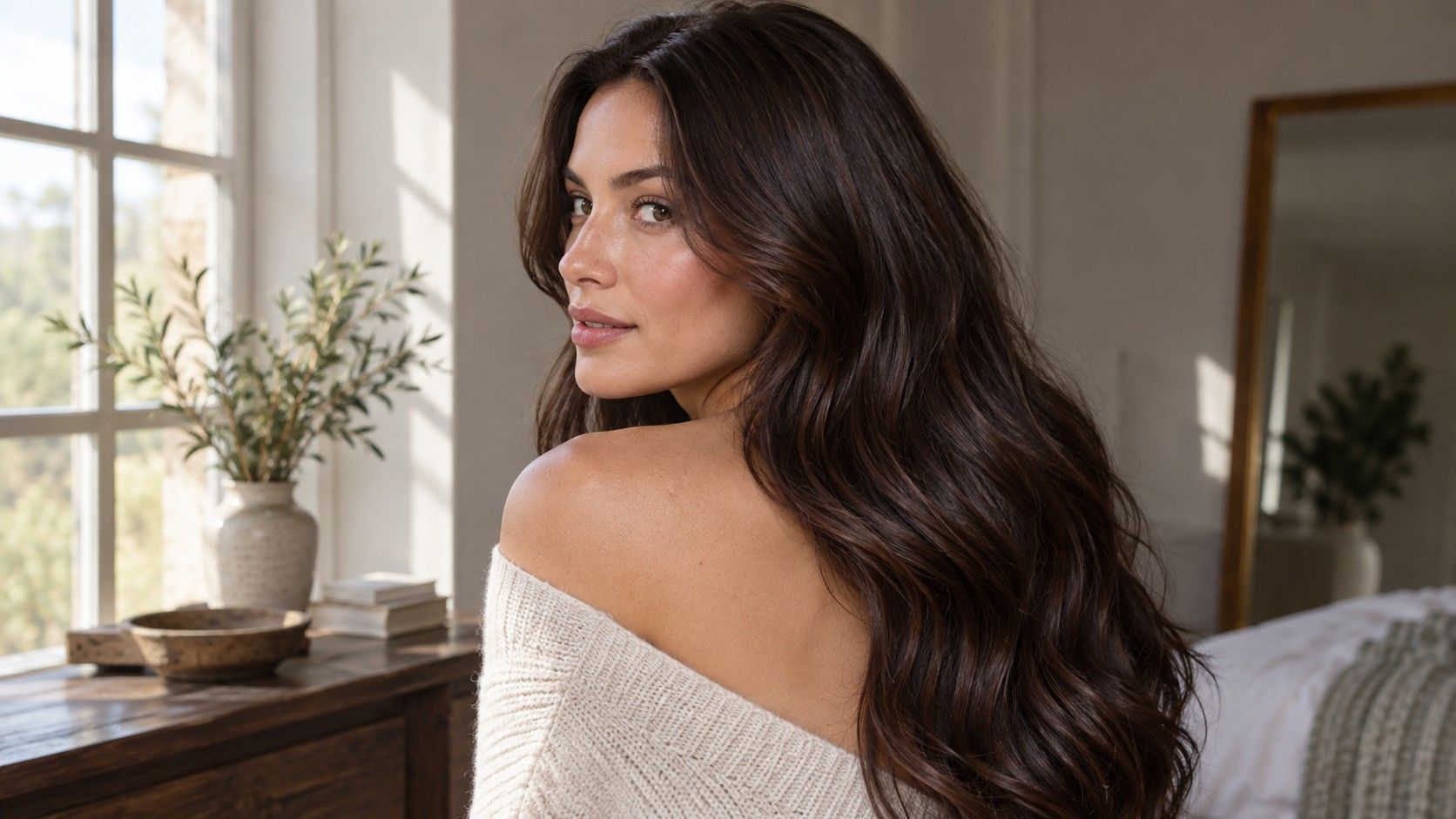
The most useful espresso brown vs soft black hair comparison happens in more than one setting. Under warm indoor bulbs, both may appear close to black because dark hair absorbs much of the available light. Near a window, espresso brown should reveal brown—often neutral or slightly warm—across bends and moving sections. Soft black may show a softer edge than a blue-black shade, but the overall impression should still be black.
Think through lighter roots before choosing black
Reference photographs can mislead when one shade is pictured under a bright studio light and the other in an evening room. Compare images at similar exposure, with the hair positioned against a similar background. A pale wall makes dark hair look deeper by contrast; a black top can make a dark brown edge easier to see. Photographs with heavy shine may also exaggerate the apparent warmth of espresso or make black look silver along the highlight.
Decide what you want a stranger to call the color in ordinary conditions. If the answer is “very dark brown, with brown visible outside,” espresso is the clearer direction. If the answer is “black, but not an inky or obviously blue black,” soft black fits the intention. Wanting a shade that looks brown only in direct sun is closer to black than many online previews suggest, because direct sunlight reveals warm reflections in almost any deeply colored hair.
| Decision point | Espresso brown | Soft black |
|---|---|---|
| Indoor appearance | Very dark brown to near-black | Clearly black in most rooms |
| Daylight reflection | Brown remains visible | Subtle neutral or warm-black reflection |
| Lighter natural roots | Usually a softer contrast | Can create a more obvious line |
| Future lighter color | Still requires care, but leaves more visual room | Dark artificial pigment can be a larger obstacle |
Let your current lengths affect the decision
The starting canvas matters more than the name printed on the box or chart. Untreated medium-brown hair, highlighted hair, and lengths carrying several rounds of dark permanent dye can all respond differently to the same color choice. A dark hair dye can add pigment, but it does not erase the history beneath it. Porous sections may grab deeper or lose tonal reflection faster, while resistant roots may remain slightly lighter.
Check the hair in zones before choosing dark brown or black hair dye. Compare the first two centimeters at the part, the middle of a section, and the last ten centimeters. If the ends already look almost black after repeated color, applying another dark formula from roots to ends can make them look denser and flatter than the fresher growth. If the lengths are highlighted, a professional may need to consider how missing underlying warmth affects an even transition to a deep shade.
Uniformity is not always the best-looking target. Natural dark hair often contains slightly lighter edges, warmer strands around the face, and varied reflection through the lengths. Espresso brown can preserve some of that visual movement, especially when the application is planned around existing depth. Soft black creates a stronger continuous silhouette, which may be exactly the goal, but it can also make differences in porosity more noticeable if the ends become overly saturated.
Color history should be described plainly before any service: permanent color, demi-permanent color, direct dye, highlights, lightening, and approximate dates. Do not rely on “it has mostly washed out.” Artificial pigment may remain inside the hair after the obvious tone has faded. A strand test on a hidden section can show whether the proposed dark result develops evenly; it cannot promise the behavior of every strand, but it provides more information than a screen preview.
Regrowth changes the look of dark color long before the lengths need a complete refresh. Someone with naturally deep brown roots may see a gentle transition into espresso and a modest contrast against soft black. Someone with dark blonde or light brown roots can get a pale-looking line against black lengths, even when the actual natural shade is not especially light. Gray hair can intensify that contrast at the part and temples.
Observe a current photograph taken four to six weeks after the last color rather than judging only freshly colored hair. The width and visibility of the root line show what regular maintenance will feel like. With espresso, lighter roots may read as soft dimension for a while. Against soft black, the same regrowth may look like reduced density at the scalp because the skin, lighter roots, and black lengths create a high-contrast boundary.
Soft black hair color maintenance does not necessarily mean coating every strand each time. The new growth and the already-dark ends have different needs. Repeated full-length permanent applications can add more artificial pigment to areas that are already deep enough. A refresh plan can distinguish root coverage from a gentler tonal refresh through faded lengths, with the exact method chosen according to color history and condition.
Also consider where the regrowth is most visible in daily life. A central part, pulled-back style, or silver concentration at the hairline exposes roots sooner than loose waves with a shifting part. This does not rule out black; it makes the schedule and contrast part of the choice. A shade that looks dramatic on day one may become inconvenient if the root line bothers you after three weeks.
Refresh the shade without turning the ends into a pigment archive
Dark colors can appear to fade and build up at the same time. Surface tone may lose richness after washing, heat, and sun, while deeper artificial pigment remains in the lengths. Applying another permanent dark shade over the full head can restore shine temporarily yet leave porous ends increasingly dense. The result may be roots with a brown reflection, middle lengths that match the target, and ends that read flat black.
A sensible refresh conversation begins with what has actually changed. If only the roots are lighter, they need different attention from the ends. If the lengths remain dark but lack reflection, the solution may not require the same process used for virgin regrowth. If warm undertones are showing because the surface tone has faded, identify whether they are brown, red, or orange rather than describing everything as brassiness.
Everyday care can reduce abrupt changes without claiming to stop fading. Very hot water, frequent high-heat styling, strong cleansing, and sustained sun exposure can make a dark finish lose its polished surface sooner. Gentle handling and appropriate color-care products may help the visible tone last, but no routine makes artificial color permanent or guarantees an exact refresh interval. Hair condition, washing pattern, water, and exposure vary too much.
Keep dated photographs in the same room and daylight position. One immediately after coloring, one after several washes, and one before the next root appointment will reveal where the color changes. This record is particularly helpful with espresso: if the brown reflection disappears only from the ends, repeatedly making the entire head darker is not the same as restoring that reflection.
Leave room for the next color change
The strongest argument for espresso is not that it is easy to remove. Any deep artificial pigment can complicate future lightening. Its advantage is that it starts with a visibly brown target, so there may be less distance between the chosen shade and a later medium brunette goal. Soft black intentionally places the result at the black end of the range, and repeated applications can increase the amount of dark pigment that must be addressed.
Black dye should not be chosen on the assumption that it will simply wash out. Some formulas soften in appearance, but residual color may remain and can lift unevenly. Previously lightened areas may release or hold color differently from natural hair. Attempting aggressive correction at home can create patchiness, warmth, or damage, especially when the color history includes overlapping permanent dye.
Before committing, name the lightest result you might realistically want within the next year. If you may want caramel pieces, medium brown, or a lighter face frame, mention that now. A colorist can explain whether a very dark brown target, a less permanent route, or a placement that avoids repeated overlap offers more flexibility for your particular hair. That discussion does not guarantee easy lightening; it prevents the future plan from being ignored.
Choose soft black when the black identity is the point and the maintenance and longer correction path feel acceptable. Choose espresso when you want depth but still want the color to disclose itself as brown in ordinary daylight. Whichever direction wins, record the formula or exact product, restrict unnecessary overlap, and keep the color history. Those details preserve more options than the shade name alone.