Brown looks like the simpler direction after months of bleaching: choose a deeper swatch, apply color, and leave blonde behind. Lightened hair makes that change less direct. It has lost much of the underlying pigment that normally supports a believable brunette shade, and its most porous sections may grab or release color at a different rate. The useful question is not merely which brown you like, but how far the hair has been lightened, what depth you want now, and whether the remaining canvas can hold an even result.
Describe how light the hair is and how it became blonde
A colorist needs more than the word “blonde.” Hair lifted from dark brown to very pale blonde presents a different starting point from naturally dark blonde hair with a few highlighted pieces. Note the natural root depth, the lightest ends, any yellow or warm bands, and sections that feel rough or look nearly white. Include the number of lightening sessions and whether bleach, high-lift color, highlights, or several methods were used.
Ask whether color filling is needed for the target depth
Previous lightening history often explains why one brown result becomes patchy. Ends that have been bleached repeatedly can be more porous than newer hair near the roots. They may take a dark deposit quickly, appear almost sooty at first, and then fade faster. A less-lightened band can stay warmer or brighter. If you cover those differences with one flat description, it is difficult to predict which section should be used for the most cautious test.
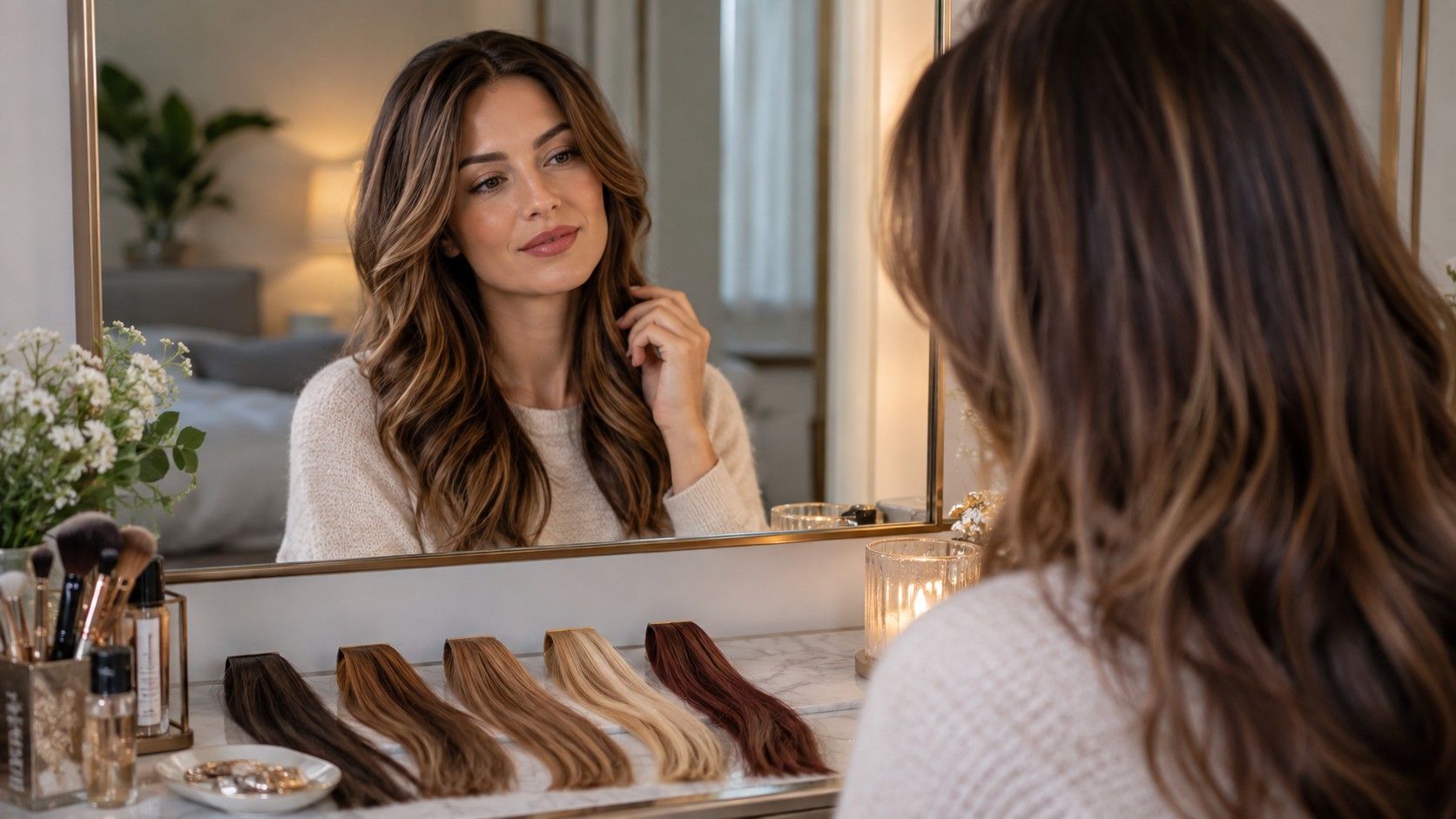
Photographs help when they are honest. Take the hair down, show the back as well as the front, and use indirect daylight without a beauty filter. Include a close view of the most fragile-looking section. A virtual brunette preview can clarify whether espresso, medium brown, or dark blonde suits your face, but it cannot measure porosity or reveal old bleach bands. Treat the preview as a target conversation, not a formula.
| Starting condition | What may affect the change | What to clarify first |
|---|---|---|
| Pale blonde from repeated full lightening | Very little visible warmth and high porosity | Hair condition and whether staged repigmentation is appropriate |
| Highlights over a natural darker base | Several depths absorb color differently | Whether dimension should remain instead of creating one solid brown |
| Warm golden blonde | More visible warmth remains, but porosity may still vary | Target depth and strand-test result |
| Blonde with dark regrowth | Natural roots and bleached lengths are different canvases | How each zone will be handled without creating bands |
Understand why lightening removed part of the brown foundation
Natural-looking brunette color is not simply “dark pigment.” As hair is lightened, deeper underlying warmth becomes exposed and then reduced as the lift continues. When very pale hair is covered with a cool brown alone, that missing warm contribution can leave the result looking hollow, khaki, smoky, or greenish. This is the context behind the familiar warning that blonde-to-brown hair turns green; it is a color-balance risk, not a guarantee that every cool brown will become visibly green.
The opposite mistake is to hear “warmth” and choose the reddest option available. Too much visible warmth can produce a coppery or muddy result that is just as far from the target. The amount and character of pigment needed depend on how light the hair is, how dark the target is, and the design of the color system. That is why fixed online recipes and universal ratios are unreliable. A level change that looks small on a screen may cross several stages on actual pale hair.
Porosity complicates the color wheel. A highly porous end can absorb part of a formula unevenly, so the first wet result may look very deep while other zones remain transparent. Later, the same end may release color quickly during washing. Tonal balance and physical condition are related in the final appearance, but toner or brown dye does not repair structural damage. If the hair stretches excessively when wet, breaks during gentle handling, or cannot tolerate routine care, the priority is an in-person assessment rather than an immediate color change.
Color filling is a controlled step used to return some of the tonal foundation that was removed during lightening before the final brunette shade is established. It can help a deeper color look less empty and fade more evenly. It is not a single orange product or one standard method. Different professional systems handle repigmentation in different ways, and some modest changes may use a one-step approach designed for that starting point.
So, does blonde hair need filling before brown? Sometimes, especially when very pale hair is moving several levels darker, but the answer depends on the starting canvas and destination. Going from a warm dark blonde to a light neutral brown is not the same task as taking near-white lengths to a rich deep brunette. The desired finish matters too: translucent, softly dimensional brown behaves differently from dense, uniform coverage.
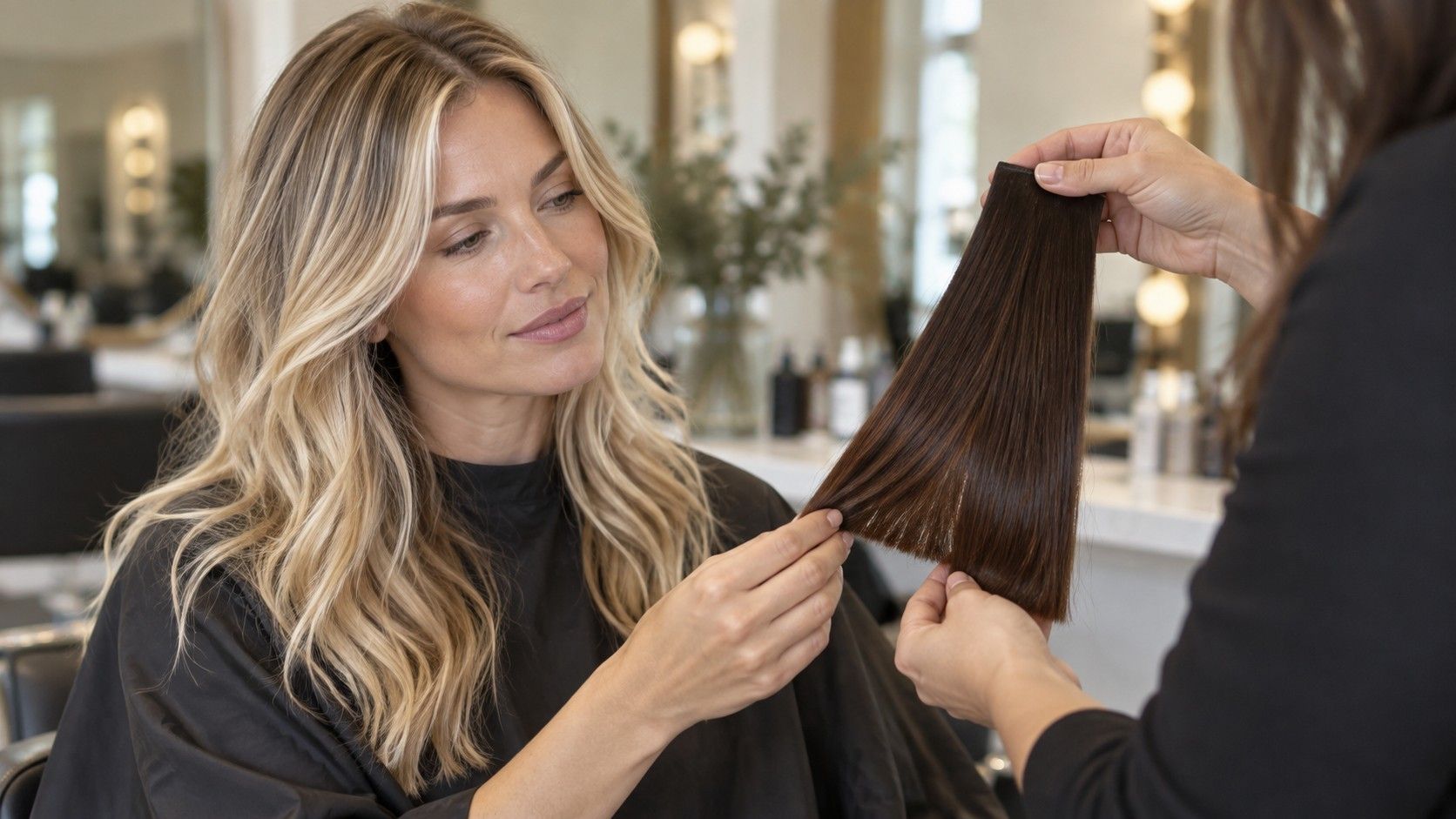
Bring a reference that shows depth as well as tone. “Chocolate” can mean a medium warm brown in one photo and an almost-black cool brown in another. Point out whether you want the light to reveal warmth, whether a few lighter pieces should remain, and how much contrast you can accept at the roots. A colorist can then decide whether filling, more than one formula, or a staged change is sensible within the chosen product system.
Avoid copying a filler recipe from someone whose starting shade only looks similar. Camera exposure hides yellow and orange, filters cool the image, and two heads of pale blonde hair can have very different histories. Do not alter developer strength, combine products across incompatible systems, or invent extra processing time. The missing-warmth concept is useful for planning; it is not permission to improvise chemistry.
Test the most porous section before committing to the whole head
A strand test is valuable because it shows how a small, representative section responds to the exact planned products and timing. Choose an area that includes the problem you need to understand, such as an over-lightened end or a pale piece near the hairline, while following the product instructions. Testing only a healthy hidden strand can give false reassurance when the front pieces are the sections most likely to grab dark.
Judge more than the initial shade. After the test has been processed, rinsed, dried, and viewed in daylight, look for depth, greenish or overly warm cast, transparency, and an abrupt difference between the root and end. Feel whether the strand tolerates gentle handling. If the service is being planned professionally, the test can inform separate handling for the roots, mid-lengths, and ends.
An allergy alert test and a strand test answer different questions. The allergy procedure described by the manufacturer concerns sensitivity risk; the strand test concerns color and hair response. One does not replace the other. Follow all label directions even if you have colored before, and stop if there is a significant reaction. A technically pleasing test strand is not a reason to ignore scalp safety.
If the strand turns much darker than expected, takes on an odd cast, or feels substantially worse, do not immediately counter it with another dye. That reaction is information. It may point to uneven porosity, an unsuitable tonal direction, or hair that needs a gentler plan. Changing one variable at a time is slower than chasing the result, but it prevents a small warning from becoming a full-head correction.
Plan for the first fade before you choose the final brown
Going darker after bleached blonde is rarely finished on the day of the service. Lightened lengths can release artificial pigment unevenly, so a brown that looks balanced at first may become warmer, lighter, or slightly hollow after several washes. Discuss what amount of early fading is expected and when the result should be reassessed. A planned refresh is different from repeatedly layering permanent dye whenever the color shifts.
Watch the pattern, not just the overall depth. If only the ends fade, they may need a different maintenance approach from the natural roots. If lighter pieces reappear around the face, the issue may be their previous lightening history rather than the whole formula. Keep a daylight photo from the finished appointment and another after a few normal washes; the comparison gives clearer information than judging the hair under changing bathroom light.
Use aftercare suited to color-treated hair and the plan provided for the service. Very hot water, frequent aggressive cleansing, and heat without appropriate protection can make a fragile brunette conversion harder to maintain, but no shampoo can permanently lock pigment into highly porous hair. Color-depositing products can also shift tone or deepen the ends, so they should not be added casually on top of an already uneven result.
The most convincing brunette change preserves some visual movement and has a realistic maintenance route. Ask how the natural root will meet the new shade, whether the first refresh will target only faded zones, and what happens if you later want to return lighter. Those questions turn a dramatic before-and-after into a color you can actually live with, while leaving room to adjust the brown once the bleached lengths reveal how they hold it.