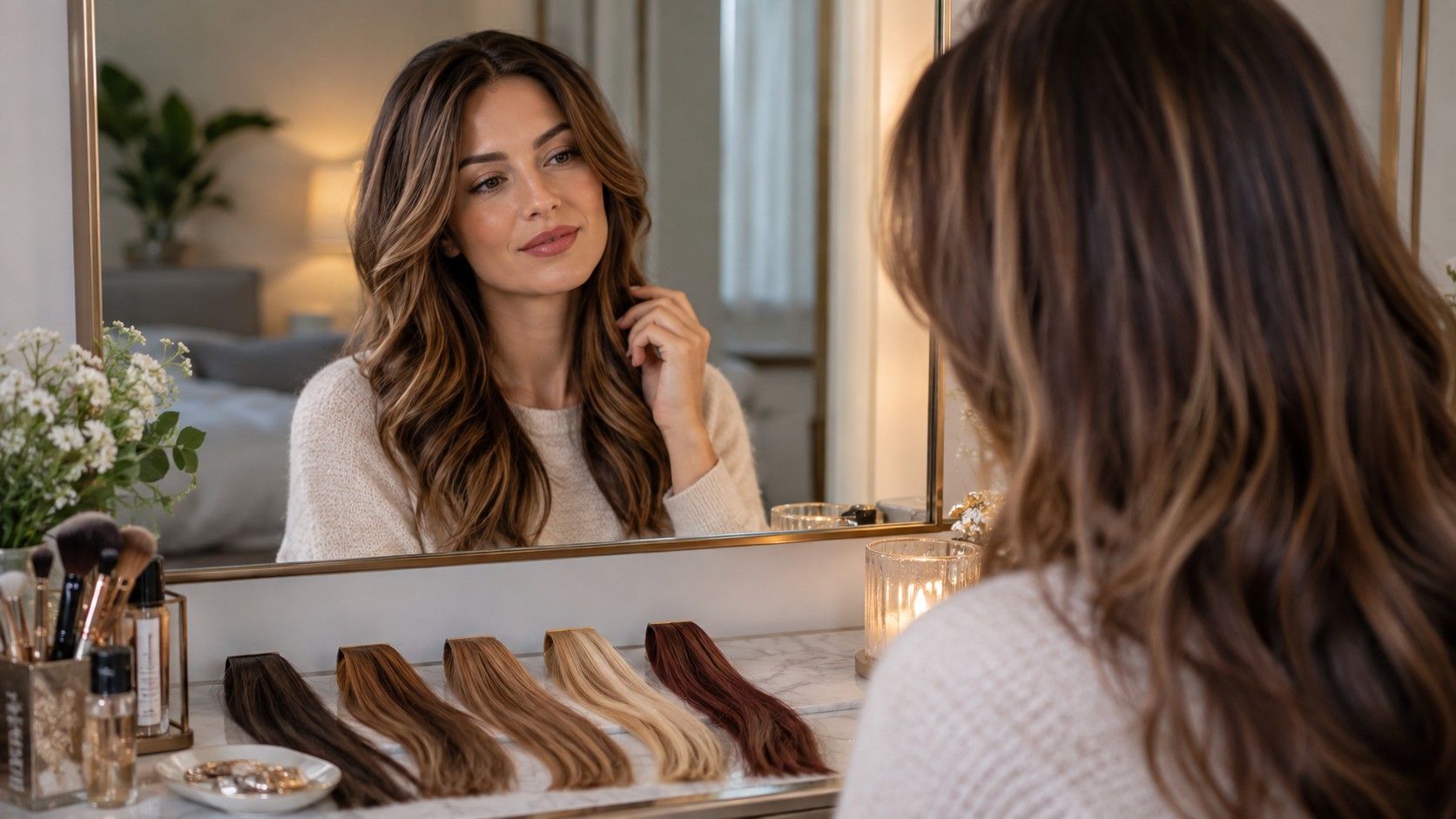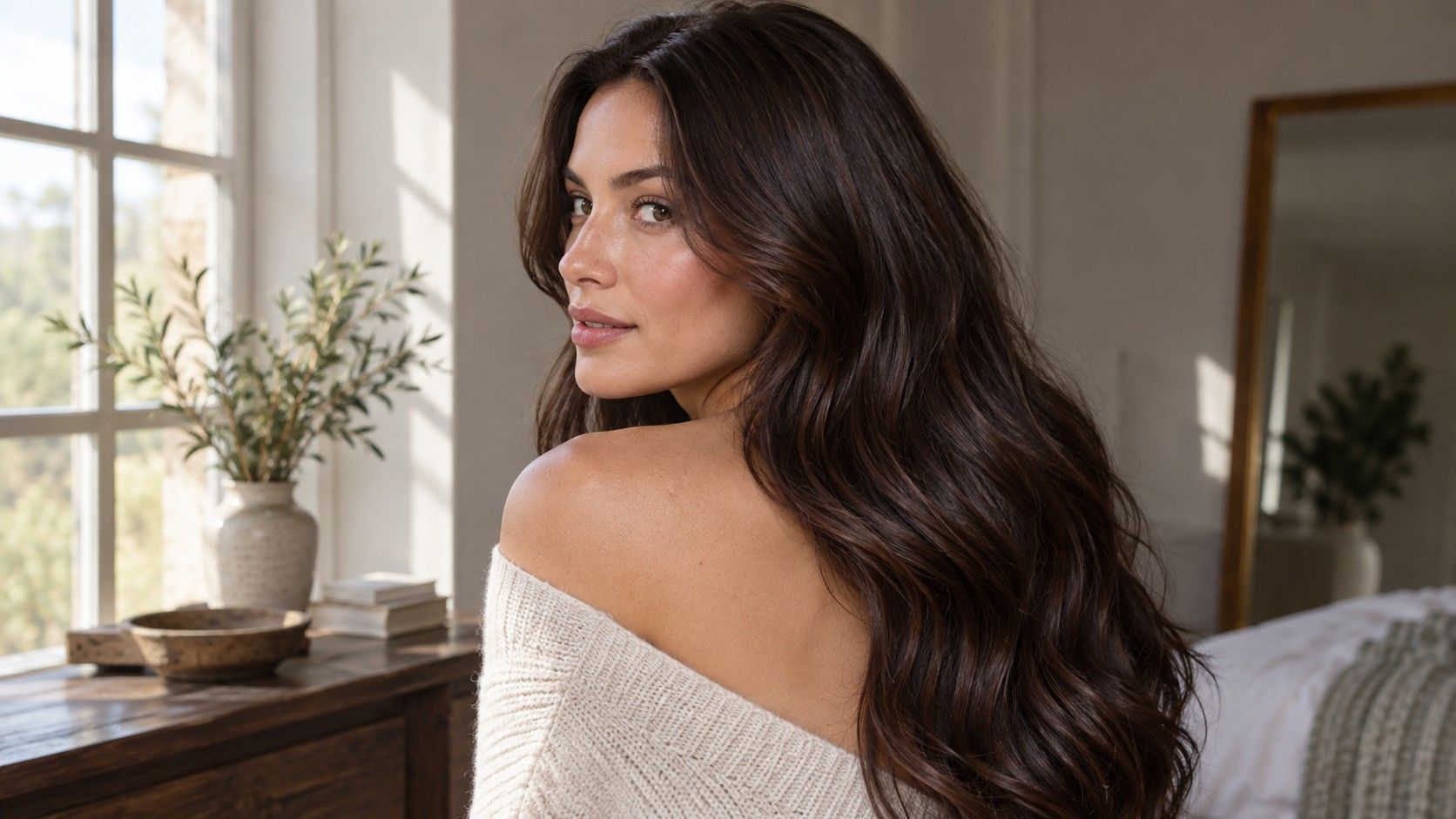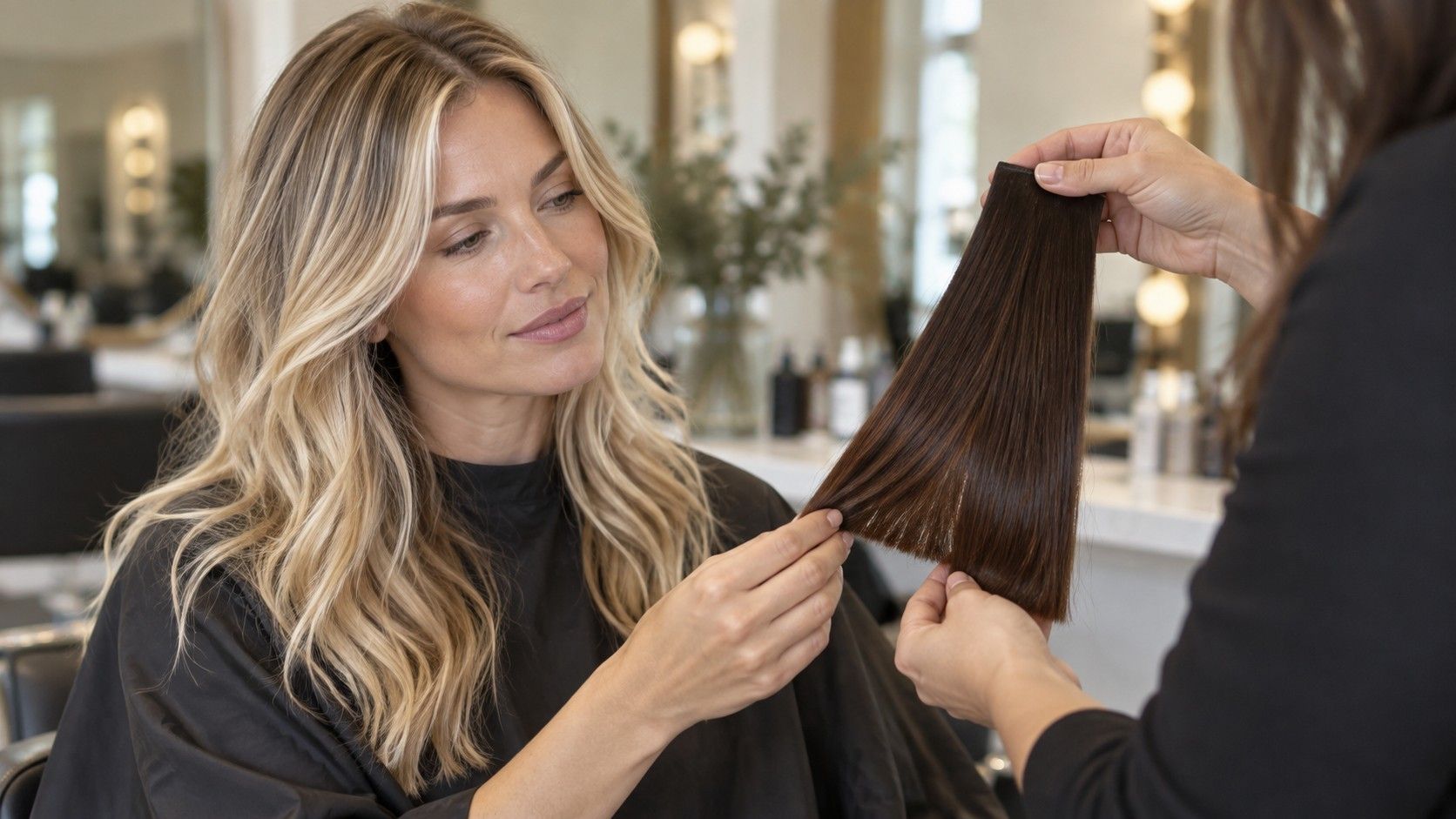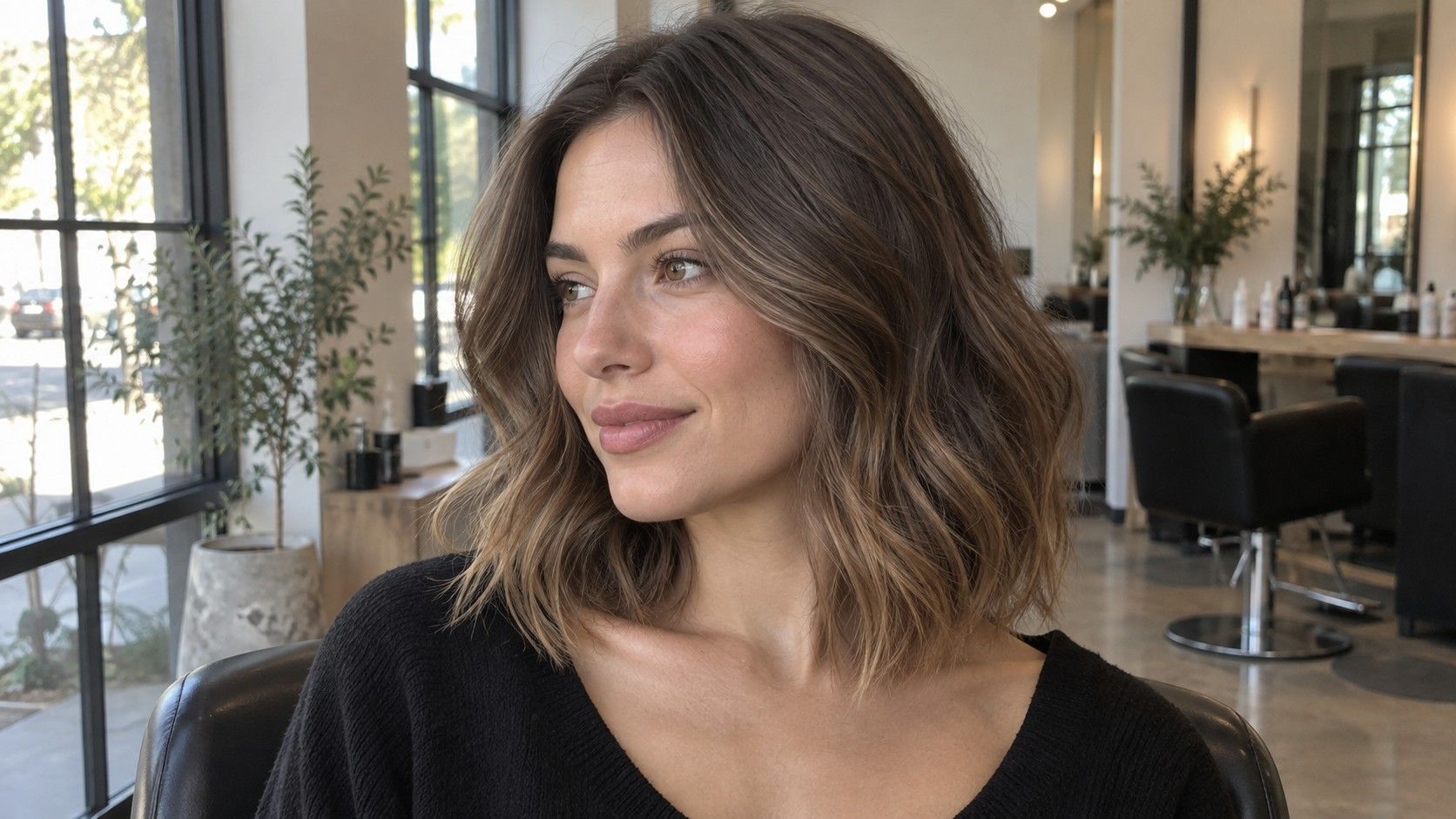
Mushroom brown looks simple in a saved photo: a quiet brunette with taupe, beige, and cool brown reflections. The difficulty appears when that reference meets real hair. Warm underlying pigment may show strongly near the roots, old highlights may be pale and porous, and the ends may already carry several rounds of color. Treating all of those areas with one aggressive ash idea can replace unwanted warmth with something equally disappointing: flat roots, khaki-looking lengths, or ends that seem darker than the rest. A better decision starts with the current canvas, not the name of the shade.
Define the target with more than one perfect swatch
“Mushroom brown” is a visual nickname, not one standardized formula. In some references it is a medium brunette with a smoky taupe reflection. In others it is much lighter, built from muted beige ribbons over a neutral brown base. Screen brightness, indoor lighting, and editing can make the same head of hair look ash in one photograph and softly warm in another. That is why a single social-media image is a weak instruction, even when the image is beautiful.
Map warm zones and light zones separately
Collect two or three references that agree in depth and degree of dimension. Then add one image that shows what you do not want: very silver, solid dark brown, obvious golden highlights, or a greenish cast. Look at the references on a neutral screen and imagine them in daylight. The useful questions are concrete. How dark should the overall result feel? Should individual ribbons remain visible? Is the desired reflection taupe, muted beige, or distinctly smoky? A colorist can work with those distinctions more reliably than with the word “mushroom” alone.
The comparison of mushroom brown vs ash brown is mainly about the visual balance you expect. Ash brown usually emphasizes coolness and the control of orange or red reflection. Mushroom brown often keeps a softer, earthier mix of cool brown, taupe, and beige. It should not necessarily look gray. If every trace of warmth disappears, skin can look drained and the hair may lose the gentle dimension that made the reference appealing.
Before thinking about toner, divide the hair into zones. Natural regrowth, previously colored mid-lengths, pale highlights, and dry ends do not begin at the same level and may not accept pigment in the same way. Stand near a window with indirect daylight, part the hair in several places, and compare the crown, sides, back, and final few inches. A warm band near the roots is a different problem from orange mid-lengths or yellow, over-lightened ends.
This check also reveals whether the target is feasible without first changing the underlying lightness. A translucent tonal service can adjust reflection, but it does not make a dark dyed base magically light enough to display pale taupe. Conversely, very light pieces may need enough neutral support to look like brunette hair rather than gray streaks. If the current hair ranges from dark warm brown to porous blonde, a single all-over deposit is unlikely to create the controlled, even result shown in a softly lit reference.
| Starting area | What to inspect | Main risk with an all-over cool deposit |
|---|---|---|
| Natural or warm roots | Depth and visible red or orange reflection | Warmth may remain while the rest becomes darker |
| Previously colored mid-lengths | Old bands, artificial darkness, and uneven fade | Existing color can limit the visible tonal change |
| Lightened pieces | How pale, yellow, or orange they are | Different pieces may turn taupe at different speeds |
| Porous blonde ends | Roughness, dullness, and how quickly they absorb water | They can overdeposit and look smoky, khaki, or too dark |
Photographs help when they are honest. Take one in indirect daylight and one under your usual indoor light, without a color filter. If the proposed result only works in a cool bathroom mirror, it is not a useful target. The aim is not to diagnose hair by phone camera; it is to spot obvious differences that deserve separate treatment or a cautious strand test.
Know why extra ash can make the ends look muddy
When mushroom brown hair turns muddy, the immediate temptation is to blame “too much gray.” The more useful explanation is often uneven uptake. Porous sections can grab a larger share of a cool or neutral deposit, while denser warm sections change less. The result is a mismatch: the ends look dull and heavy, yet an orange band still shows above them. Adding more of the same color everywhere tends to deepen that mismatch.
Muddiness can also be a depth problem. Pale, fragile ends may need a balanced brunette foundation before they can read as soft taupe. Simply pushing them cooler can remove the lively reflection without giving them believable brown depth. At the other extreme, repeatedly refreshing the entire length may stack pigment until the dimension closes up. Hair that looked airy in the first week can become a nearly solid dark mass after several deposits.
This is where a strand test earns its place. Test a discreet section that includes the troublesome ends, follow the specific product or salon process being considered, and assess it only after the hair is fully dry in daylight. A color strand test answers a color question: depth, tone, and uptake. It does not replace the allergy procedure required by the product instructions. If the test end looks significantly darker or greener than the middle, that is useful evidence to adjust the plan rather than a cue to shorten timing by guesswork.
Decide whether dimension belongs in the result
Many convincing mushroom brunette references are not one flat shade. Their muted appearance comes from a neutral-to-cool base combined with restrained lighter pieces. Those pieces may be fine brunette highlights, soft face framing, or old balayage that has been carefully toned. They allow taupe and muted beige to show without requiring the entire head to become very light.
Dimension also changes the maintenance calculation. A solid cool brunette can show warm regrowth and fading as a clear shift. Fine ribbons break up that boundary, but lightened sections may be more porous and require selective care. Ask whether the reference depends on visible ribbons at the front, brightness through the ends, or merely shine catching the light. If your current hair is uniformly dark from permanent dye, a gloss alone cannot recreate a photograph whose effect depends on lighter strands underneath.
There is a visual trade-off worth accepting openly. More contrast gives movement and makes the taupe reflection easier to see, but it creates more variation in porosity. Less contrast is quieter and often simpler to maintain, but it can read as ordinary neutral brown in dim light. Neither is the correct version. The sensible choice is the one that fits the starting hair and how often you are willing to revisit the lighter areas.
Keep some balance near the face
A muted brunette can be cool without making the complexion look gray. Hold the reference near your face in natural light and notice whether its depth, not merely its temperature, is the intimidating part. Someone moving from light blonde to medium mushroom brown may be reacting to the amount of darkness around the face. Leaving a small degree of beige softness or subtle face-framing dimension can matter more than chasing the coolest possible toner.
Clothing and makeup can temporarily change how a shade feels, but they should not be used to excuse a result that looks dull in every setting. Check the hair with a white or neutral top, because bright colored fabric throws reflection onto the skin and lengths. Also compare the front hairline with the nape. Short, fine hairs around the face can accept or lose color differently from the bulk of the hair, so the perimeter may need a more cautious approach.
If there is uncertainty between two depths, a reversible preview is useful for proportions but limited for chemistry. A virtual hair color image can show whether a medium muted brunette frames the face more comfortably than a deep one. It cannot predict how warm bands will neutralize or how porous ends will absorb deposit. Use it to narrow the visual target, then use the hair history and strand result to judge feasibility.
Refresh returning warmth without stacking pigment everywhere
Warmth returning does not automatically mean the original service failed. Cool and muted reflections often become less visible as deposited color fades, while the underlying warmth remains. Sun exposure, frequent washing, hot tools, mineral buildup, and the condition of lightened hair can all change how quickly the result loses its quiet finish. There is no universal number of washes that defines the right refresh date.
Judge the zones again before adding color. If warmth is visible mainly near the crown but the ends remain deep and cool, an all-over refresh risks overdeposit on the very area that needs nothing. If the overall shade is balanced but lacks polish, a clear shine-focused option may make more sense than another strong tinted layer. If the pale pieces have become brassy while the base still looks good, a targeted tonal adjustment may be the better conversation.
Use gentle cleansing habits that suit the scalp, moderate unnecessary heat, and follow the aftercare instructions attached to the actual color service. Clarifying products can affect deposited tone, yet avoiding cleansing indefinitely is not a maintenance plan. When hard-water buildup, stubborn bands, or accumulated dark pigment complicate the picture, correction is safer with a professional assessment than with repeated ash applications.
The durable version of mushroom brown on warm hair is not the coldest result achievable on day one. It is a controlled brunette in which the roots, lighter pieces, and ends still belong to the same story after the first washes. Clear references, a zone-by-zone assessment, and restraint during refreshes do more for that result than an ever-stronger attempt to cancel every warm reflection.