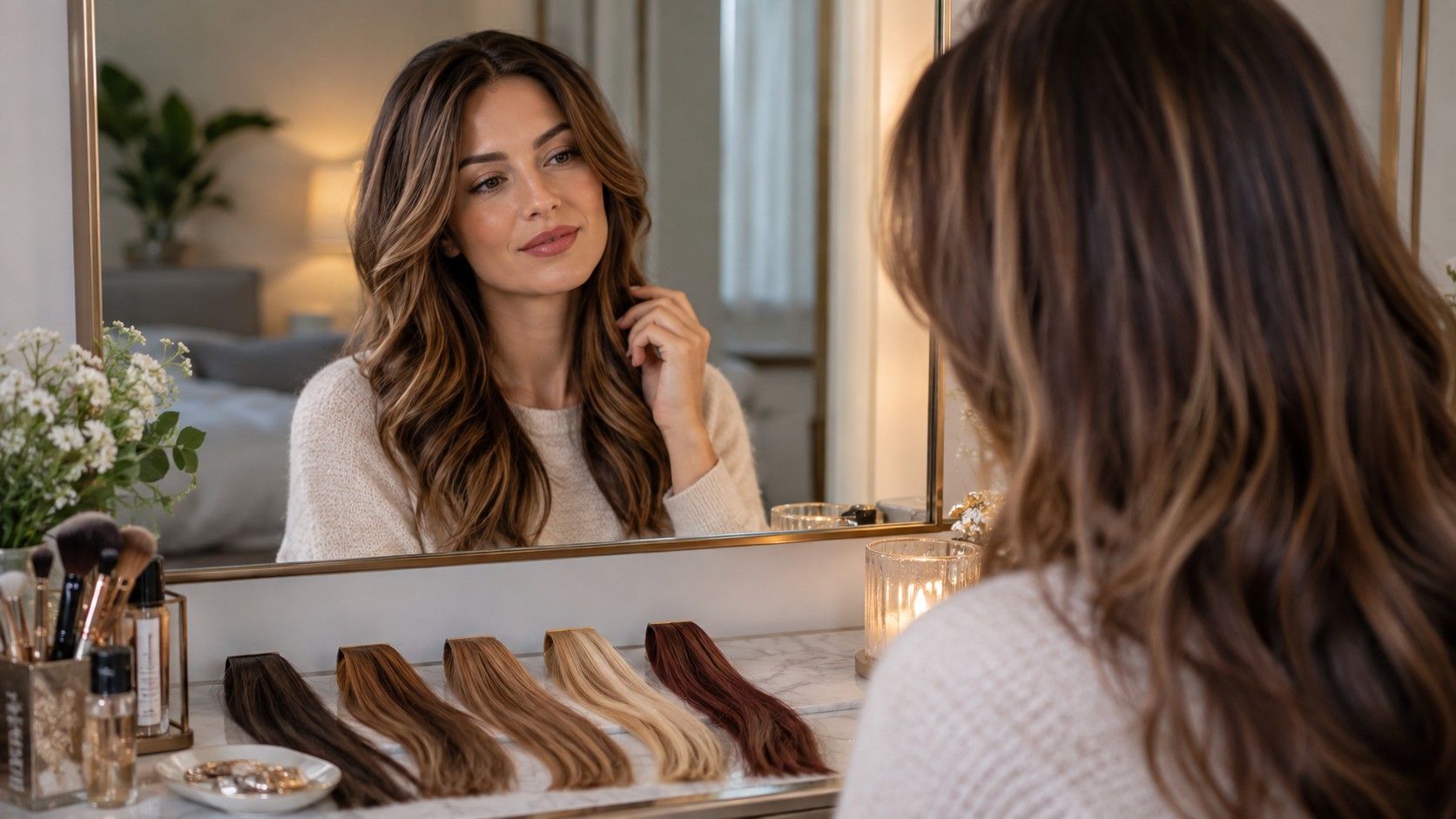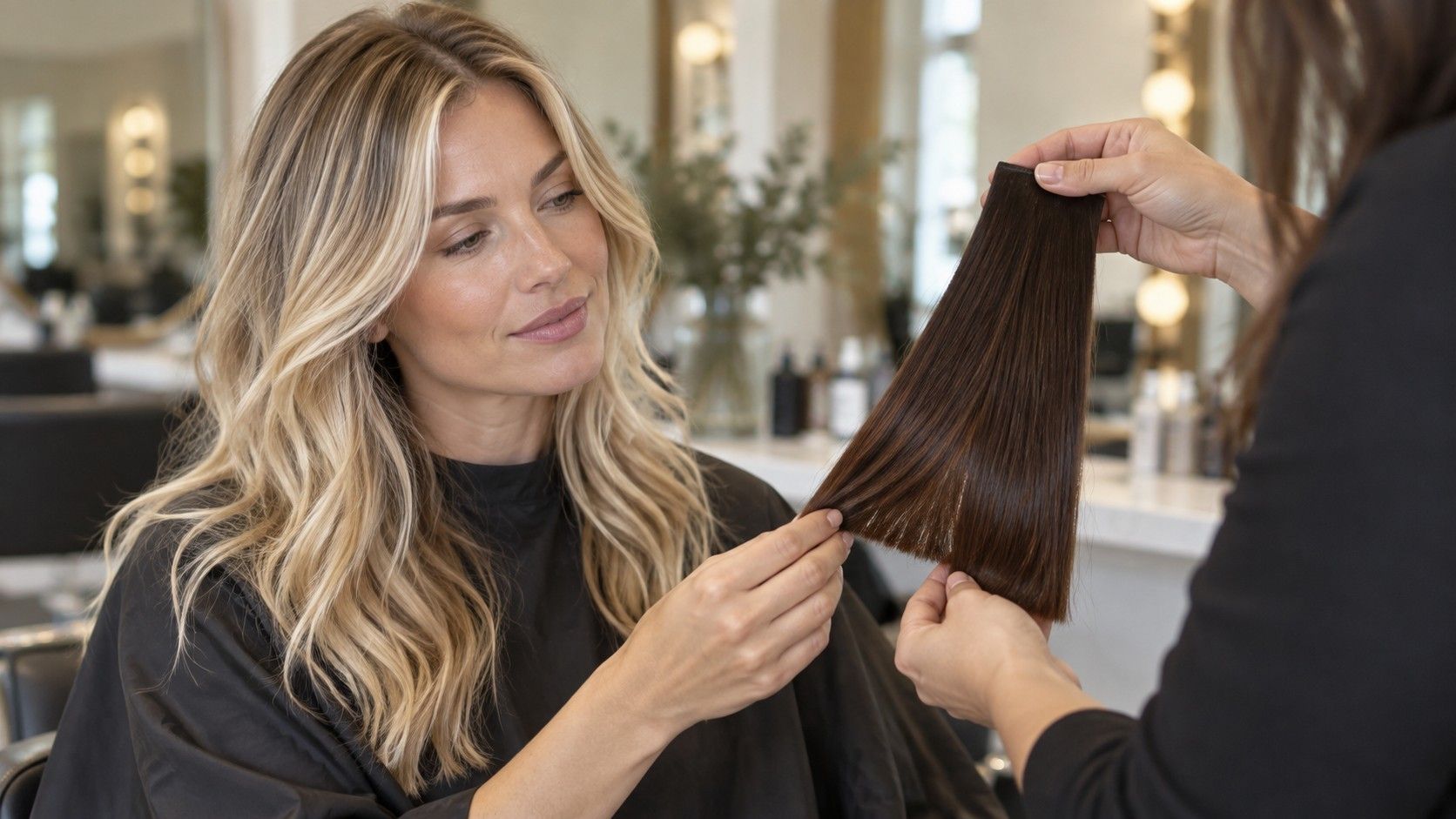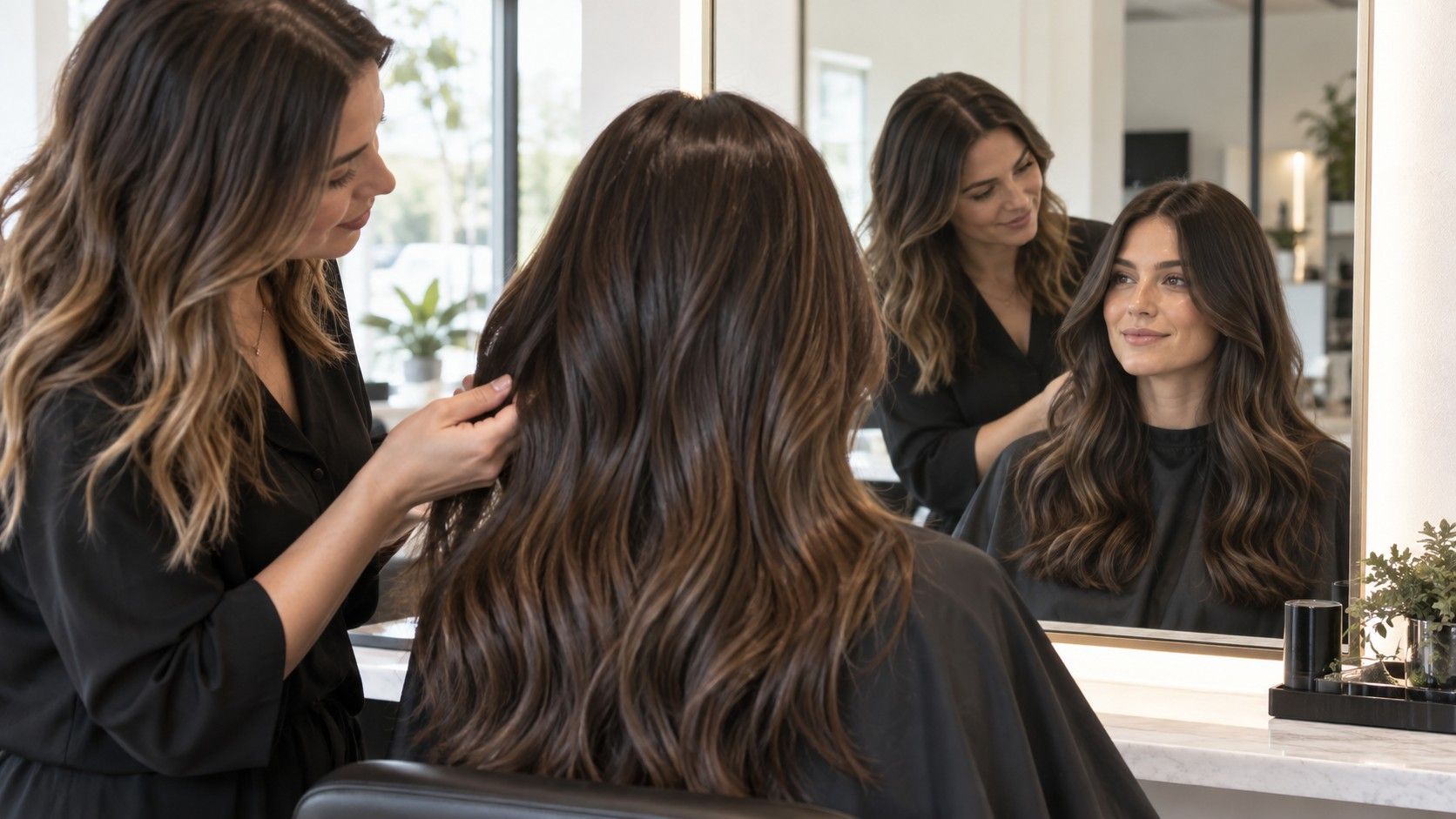
Asking a salon for “a toner” can mean anything from cooling yellow highlights to adding a soft brunette glaze. Asking for “a gloss” may lead to a clear shine service in one chair and a tinted color deposit in another. The labels overlap, product lines differ, and polished before-and-after photos rarely show the starting lightness clearly. Instead of trying to settle hair gloss vs toner as a universal vocabulary contest, describe the visible problem, the areas involved, and the result you want after the shine has softened.
Describe the problem before naming the service
Begin with an observation that can be checked in the mirror. Perhaps blonde highlights have become yellow, a brunette balayage looks orange through the middle, red lengths have faded, or healthy natural hair simply appears dull. These are different requests. “I want the yellow pieces to look beige but not gray” gives more direction than “I need toner.” “I like my color and only want more shine” points toward another type of conversation.
Separate shine from a visible change in color
Bring reference photos, but choose them for depth and tone rather than dramatic lighting. One image should represent the desired result and another can show what would feel too cool, too dark, or too solid. View them beside the hair in indirect daylight. Ring lights can erase warm reflection, while a warm salon lamp can make a neutral brunette look copper. A service choice based only on one filtered image is fragile.
Hair history belongs in the description. Mention permanent dye, lightening, old vivid color, smoothing treatments, plant color, and dark bands. Tonal color is influenced by what is already in the hair. A pale natural root, an orange lightened middle, and porous blonde ends cannot be assumed to respond as one even canvas. This is why the most useful consultation often sounds less like ordering from a menu and more like mapping three separate zones.
The distinction between clear gloss vs tinted gloss is practical. A clear gloss is chosen mainly to enhance shine and the feel or appearance of the surface without intentionally shifting the shade. It may make existing color look richer because smoother, shinier hair reflects light differently, but it does not neutralize orange or turn a warm blonde beige. It also should not be treated as permanent repair for damaged hair.
A tinted gloss includes color deposit. Depending on the product and starting hair, it may refine warmth, add beige or copper, deepen the appearance, or refresh faded lengths. Many salons may call such a service a toner, especially when it follows highlights. Other salons reserve “toner” for a more targeted tonal correction and use “gloss” for a broader finishing service. Neither vocabulary is reliably universal.
| What you want to change | Useful service conversation | What to clarify |
|---|---|---|
| Shine only | Clear gloss or shine-focused finish | Confirm that no tint or depth change is intended |
| Yellow or orange reflection | Toner or tinted gloss for tonal correction | Name the unwanted tone and the acceptable final warmth |
| Faded brown, red, or copper | Tinted gloss or deposit refresh | Ask how much darker or richer the lengths may look |
| Much lighter hair | Lightening assessment, not merely toner | Check condition, color history, and achievable lightness |
| Uneven porous ends | Selective or adjusted deposit | Ask how the ends will be protected from overdeposit |
The product used matters more than the word printed on the service list. Ask whether it is clear or tinted, whether it uses developer, whether it is applied all over or selectively, and whether it is expected to alter depth. Those questions do not require a chemistry lesson. They simply turn an ambiguous label into an understandable plan.
Check whether the hair is light enough for the desired tone
Can toner make hair lighter? As a planning rule, toner is not a dependable way to make previously dark-dyed hair visibly lighter. Tonal deposit changes reflection on the lightness already present and can sometimes make hair appear deeper. A pale beige blonde needs a sufficiently light underlying canvas; placing a cool tint over an orange, darker base does not create the missing pale background.
Imagine two strands held beside the same beige reference. One is pale yellow after controlled lightening. The other is medium orange under old brown dye. The same tonal idea will not produce matching results. The first may move toward beige, while the second may remain deeper and warmer or become a muted brown. Neutralization is not the same as lifting.
This point matters for brunettes too. A mushroom or taupe reference may depend on lighter ribbons through the hair. A tinted gloss can refine those ribbons, but it cannot invent their lightness on a uniform dark base. If the inspiration photo shows dimension, ask which parts of that result come from highlights and which come from the finishing tone. Otherwise, a gloss appointment may deliver a respectable polished brown that still looks nothing like the airy photograph.
A virtual preview can help decide whether a cooler or richer shade suits the face, but it cannot reveal whether the existing pigment can support that shade. Use the preview for visual preference. Use an honest starting-level assessment and, when needed, a professional lightening consultation for feasibility.
Protect porous ends from an accidental depth change
Porous ends can accept tinted color faster or more heavily than healthier roots and mid-lengths. This is common on old highlights, repeated balayage, and hair exposed to substantial heat or chemical processing. An all-over cool gloss may leave the crown pleasantly neutral while the final inches look gray, khaki, or several shades darker. Wet salon lighting can hide the difference until the hair is dry.
Ask how the application will account for the ends. The answer may involve different timing, a different formula, selective placement, or avoiding tint on sections that are already balanced. The exact method belongs to the chosen professional or product instructions; guessing corrective mixing ratios at home is not a safe substitute. What matters is that the variation has been noticed before color is applied.
A strand test is particularly useful when the lengths are pale or the requested change is darker. Select a discreet strand that includes the vulnerable end, use the intended process, and judge it fully dry in daylight. The test helps answer whether the deposit is too dark, too cool, or uneven. It does not replace the manufacturer’s allergy alert test, which addresses a separate safety question.
Repeated glossing can also build depth. If every appointment pulls tinted color from roots to ends, the oldest hair receives the most layers. A client may report that the gloss “fades quickly” near the face while the ends become progressively dense. Before refreshing, compare the zones: returning warmth at the crown does not prove that the lengths need another complete coat.
Agree on what the faded result should look like
A fresh toner often looks coolest and most polished immediately after the service. Over time, deposited reflection softens and more underlying warmth becomes visible. The schedule is not fixed across all products or people. Washing frequency, cleansing routine, hot tools, sun, water quality, starting porosity, and the chosen shade all affect the pace and character of fading.
Ask three specific questions before the service. What change should be visible on day one? Which underlying tone is likely to return? Will any deposited depth remain through the ends? For a blonde who dislikes gray, a slightly warmer first-day result may age more comfortably. For a brunette with very porous tips, accepting less initial depth can prevent a heavy faded band.
Maintenance should respond to what has changed, not to an automatic date. If tone remains balanced but shine has softened, another tinted service may be unnecessary. If only a few highlighted pieces have turned brassy, targeted correction may preserve the rest. If mineral buildup or old artificial pigment is distorting the color, repeated cool deposit can hide the issue briefly while making later correction harder.
Leave the salon with a shared definition of success
Before application, repeat the plan in ordinary language: keep the same lightness, reduce yellow but retain beige, add shine, avoid darkening the ends, or refresh copper without making it red. Confirm whether the chosen product is clear or tinted and which zones will receive it. Also ask how the result will be assessed after drying, because a wet swatch is not a fair picture of final depth.
Safety remains product-specific. Follow the required allergy procedure and application instructions, and do not assume that a familiar service name means a familiar formula. If the scalp is irritated or hair is breaking, pause the cosmetic goal and seek appropriate professional advice. A gloss can improve the temporary look and feel of hair, but it cannot restore structurally damaged strands to an undamaged state.
The best answer to hair gloss vs toner is therefore a short description, not a winner. Choose clear gloss when the intention is chiefly shine with no planned tonal shift. Discuss tinted gloss or toner when deposit is needed to refine or refresh color. If greater lightness is essential, treat that as a separate feasibility question. Once the desired change, starting canvas, vulnerable ends, and faded result are explicit, the salon label becomes much less important—and unpleasant surprises become far easier to avoid.